Common sex-toy myths, explained
No, a vibrator won't ruin your body or replace your partner. Let's untangle the claims I hear most often—and keep the useful cautions that get lost with them.

Abigail's quick take
“Most toy myths turn a temporary sensation, familiar habit or relationship worry into a dramatic universal rule.”
- Best for
- Anyone worried about desensitization, dependence, partners or what a higher price really buys.
- Keep in mind
- Persistent pain or numbness deserves professional attention rather than reassurance from an article.
Myth: 'A vibrator will permanently desensitise you'
Strong, prolonged vibration can leave an area feeling temporarily less sensitive, just as your hand tingles after holding a power tool or your nose stops noticing a perfume. That short-term adaptation usually fades after a break. It is not good evidence that you have damaged your body.
If you notice sensation fading during use, turn the toy down, change position, add a barrier such as underwear or stop for a while. I deliberately vary pressure and settings instead of holding maximum power on one exact point for a long time.
Persistent numbness, pain or a change that does not resolve is different. Stop using the product and speak with a qualified clinician. The myth is that ordinary vibrator use inevitably causes permanent loss of sensation—not that every symptom should be ignored.
Myth: 'You'll become dependent and ordinary touch will stop working'
Bodies learn context and preference. If you always use one very strong sensation in one exact position, you may find it easiest to reach orgasm that way for a while. That is a habit, not a moral failure and not proof that your body is broken.
You can keep variety by alternating toys, hands, pressure, positions and speeds—but you do not owe anyone variety. If a vibrator is the reliable route you enjoy, using it is not cheating at sex. We do not accuse people of dependency on the pillow position that helps them sleep.
If you want to broaden your response, change one variable at a time and lower the pressure to perform. Learning a new route can take longer than returning to a familiar one, especially when another person is watching the clock even silently.
Myth: 'Toys mean your partner is not enough'
A product can provide a rhythm, pressure or endurance that a human body cannot comfortably reproduce. That is a feature of a tool, not a comparison of emotional value. A whisk does not insult the person who could have stirred by hand.
The fear can still be real. Talk about what the toy adds and how you want to use it together or separately. Do not spring a purchase on a partner and then dismiss their reaction as insecurity. Curiosity and reassurance can share the same conversation.
A toy also does not repair poor communication. If one person uses it to avoid discussing pain, desire, consent or resentment, the object is not the problem—but it is not the solution either.
Myth: 'More expensive always means better'
Price often buys better motors, quieter housings, refined controls, longer warranties and more consistent silicone. Up to a point, those differences are real. Beyond that point you may be paying for brand, design language, packaging and features you will never open.
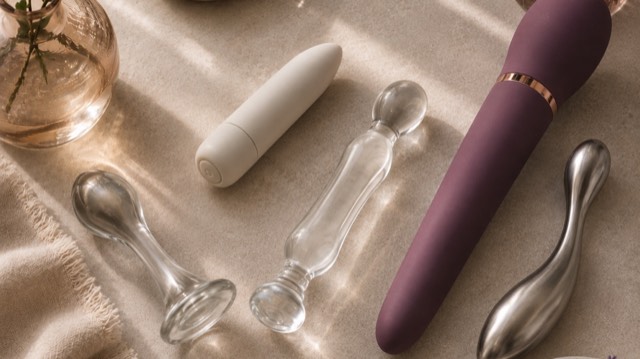
I compare the product with the need. A simple bullet can be excellent if you want focused vibration and easy storage. A premium pressure-wave toy earns its price only if you value its mechanism, low settings and quieter engineering. The expensive option is poor value when its main advantage does not matter to your body.
Budget products still need named materials, safe design and clear care information. Cheap is not automatically unsafe, and luxury is not automatically body-safe. Documentation beats a velvet box.
Myth: "Medical grade" means a product is medically approved
'Medical grade' is used loosely in pleasure-product marketing. A manufacturer may mean platinum-cured silicone produced to a particular specification, or the phrase may be doing little more than creating reassurance. Look for the named material and the standard or testing behind the claim.
Similarly, an ingredient or material appearing in regulated medical products does not mean every consumer toy made with something similar has been approved to diagnose, treat or prevent a condition.
I trust clear composition, reputable manufacturing, care instructions, warranty and transparent test information. I do not treat two reassuring words as a substitute for all five.
Myth: 'Using a toy is only about orgasm'
Products can be used for massage, warm-up, curiosity, sensation without orgasm, shared play, accessibility or simply because routine is comforting. An orgasm can be lovely, but turning it into the required ending makes exploration feel like an exam.
Some of my most useful comparison notes come from what happens before anything climactic: whether the controls interrupt attention, whether a handle looks likely to strain the wrist, whether the lowest setting allows a gradual start and whether cleanup seems worth it afterward.
The honest version is less dramatic than the myths. Toys can create temporary adaptation, form familiar habits, raise relationship questions and vary enormously in quality. None of that makes them dangerous by definition or necessary for everyone. They are tools; the useful questions are how they are made, how they are used and whether they suit the person choosing them.
This article is educational and is not a substitute for individualised care from a qualified professional.
Sources
- Sex-toy cleaning, barriers and safer use — Planned Parenthood
- Defining sexual health — World Health Organization
Abigail's shortlist
What I'd genuinely point you toward
These aren't here to fill a product rail. Each one illustrates something I've talked about in this guide, and I've included the reason I'd consider it.
- myths
- education