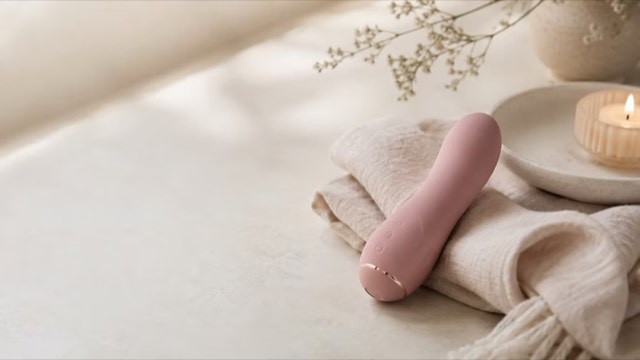
How pleasure products can support personal wellbeing
Pleasure can be restorative without becoming a miracle cure. This is how I think about body literacy, stress, solo time and the limits of wellness marketing.


Abigail's quick take
“Pleasure products can support rest, curiosity and body literacy without becoming treatments or promises of transformation.”
- Best for
- Anyone approaching pleasure as part of a broader personal-wellbeing routine.
- Keep in mind
- A product can support comfort, but it cannot diagnose or resolve persistent symptoms.
Pleasure does not need a productivity target
Wellness culture has a talent for turning every pleasant thing into a job. Sleep must improve performance, a bath must regulate something, and pleasure must apparently optimise your hormones before it is allowed to count. I don't believe you need that permission. Enjoyment is a valid reason by itself.
A toy can make pleasure easier to access, offer a sensation your hands cannot comfortably sustain, or simply introduce novelty. It does not make the experience more mature, liberated or successful than using your hands—or choosing not to do anything at all.
The most useful wellbeing question is not 'What will this fix?' It is 'Will this help me feel more at home in my body, on terms that feel good to me?' Sometimes the answer is yes. Sometimes the answer is a nap, privacy or a conversation instead.
Body literacy is the benefit I can talk about honestly
Body literacy means noticing and naming your own experience: pressure feels better than fluttering; direct touch is too much today; a slower build helps; this angle causes discomfort; I need more lubricant; I want to stop. Those observations are practical knowledge, not a test you can pass.
Solo exploration can make that listening easier because no one else is waiting for an answer. Adjustable products are useful here: change one variable at a time, notice the difference, and resist the urge to race toward the strongest setting. I have learned more from turning a toy down than from proving I could use it at maximum.
That vocabulary can travel into partnered experiences. 'I like broad pressure at first' gives another person something real to work with. It is kinder and more useful than expecting either of you to guess.
Ritual can matter as much as the object
For me, the genuinely restorative part is often the transition: putting my phone away, warming the room, finding lubricant before I am impatient, and allowing enough time that nothing needs to happen quickly. A beautiful product can support that ritual, but it cannot create the privacy or permission on its own.
If your brain stays busy, sensory details can help. Notice the weight of the product, the temperature of the material, your breathing and whether your jaw is clenched. This is not a mindfulness assignment. It is simply a way to come back when your attention has wandered to tomorrow's inbox.
Accessibility belongs in this conversation too. A toy with a large handle or remote control can reduce strain, while a wand can provide sustained pressure without asking a hand to repeat the same motion. The right tool is the one that makes the experience more available to your actual body.
What I will not promise you
You will see confident claims about better sleep, lower stress, pelvic health, circulation and improved relationships. Some people report those experiences, and sexual response can involve temporary physiological changes, but evidence for a specific consumer product producing a specific health outcome is limited.
I am wary when a brand borrows medical language to sell an ordinary vibrator. 'Medical grade' is often used loosely, and a wellness label does not turn marketing into clinical evidence. I would rather tell you that a product is comfortable, quiet and easy to control than suggest it will treat anxiety or repair intimacy.
If pleasure helps you unwind or reconnect, you do not need to downgrade that experience because it is subjective. Subjective wellbeing matters. It just should not be repackaged as a guaranteed health claim.
When a product is not the right next step
Persistent pain, bleeding, numbness, sudden changes in sensation or symptoms that worry you deserve a conversation with a qualified clinician. Stop using anything that causes pain you did not intend, and do not use a stronger motor to push through reduced sensation.
If solo or partnered sexual behaviour feels compulsive, distressing or out of step with what you want for yourself, a sex-positive therapist can offer support without shame. A shopping guide cannot diagnose the problem, and another product is unlikely to solve it.
Pleasure products are tools. At their best, they make curiosity, comfort and self-knowledge a little easier. That is a modest claim, but it is also a meaningful one—and it is enough.
This article is educational and is not a substitute for individualised care from a qualified professional.
Sources
- Defining sexual health — World Health Organization
Written to avoid health claims. Educational only.
Abigail's shortlist
What I'd genuinely point you toward
These aren't here to fill a product rail. Each one illustrates something I've talked about in this guide, and I've included the reason I'd consider it.
- wellbeing
- education