A beginner's guide to choosing your first pleasure product
If you've got six tabs open and no idea what half the words mean, start here. I'll help you narrow the choice without turning it into homework.
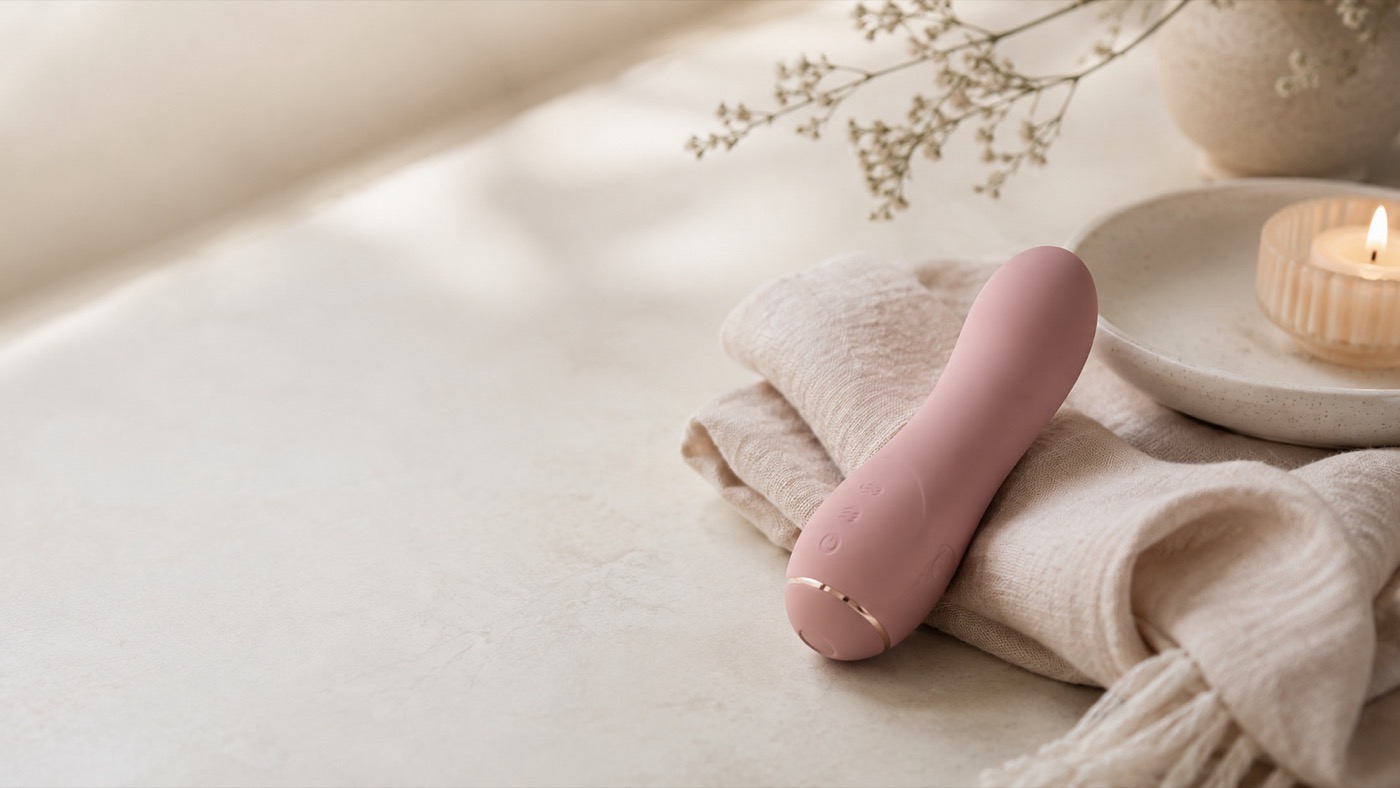

Abigail's quick take
“Your first product should leave room to explore; I would choose clear controls and adaptable placement over an impressive feature list.”
- Best for
- First-time shoppers who feel buried in unfamiliar shapes and terminology.
- Keep in mind
- Smaller and simpler can be a thoughtful starting point, not a lesser purchase.
First: you are not supposed to know the product names
Almost every first-time shopper I've spoken to thinks everyone else received a secret vocabulary list. They didn't. Words such as bullet, wand, rabbit and pressure-wave describe shapes or mechanisms; they don't tell you what your body will like. You are allowed to arrive knowing only that you're curious.
I start with a much less glamorous question: what already feels good? Maybe you prefer broad pressure through clothing, a fingertip in one precise place, a steady rhythm, or a very gradual build. That small piece of self-knowledge is more useful than any list of twenty modes.
If you genuinely don't know, choose something versatile, externally focused and easy to move around. A first toy should help you explore. It shouldn't lock you into one angle or make you feel as though you're failing to use it correctly.
Choose the sensation before you choose the shape
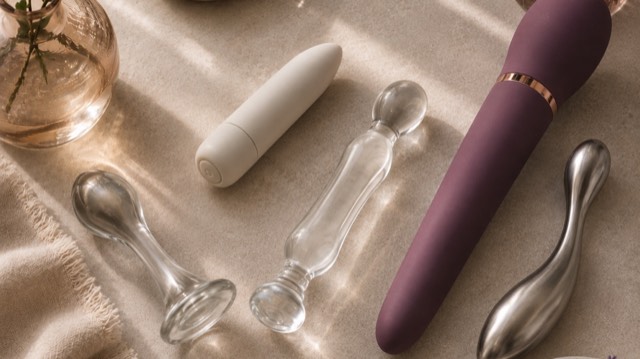
For vibration, think about broad versus precise. Wands and larger heads spread sensation over a wider area. Bullets and pointed tips are more focused. Neither is better. I personally reach for broader, lower-frequency vibration when I want to relax, but plenty of people love a small, buzzy motor because it gets straight to the point.
Pressure-wave toys feel different from conventional vibration. They pulse air around the clitoris rather than vibrating directly against it. Some people find that easier to enjoy because there's less contact; others find the sensation intense even on low. If you know direct touch quickly becomes too much, pressure-wave can be worth considering, but it isn't automatically the universal beginner choice marketing sometimes suggests.
I would leave highly flexible couples' toys, very large internal shapes and anything with a one-button control maze until you have a clearer idea of what you want. Curiosity is good. Buying the most complicated object on the page because it promises twelve experiences at once usually isn't.
Read the materials line before the marketing copy
I look for clearly named, non-porous materials: silicone, ABS plastic, borosilicate glass or stainless steel. They can be cleaned thoroughly and they don't hold on to residue in the way porous jelly, TPR and many 'real-feel' blends can. A vague phrase such as 'velvety body-safe material' is not a material specification.
Silicone is the forgiving all-rounder for most first products because it has some give and warms quickly against the body. Glass and steel are firm, heavier and wonderful for temperature play, but they offer no cushioning. That firmness can feel fantastic when it is wanted and very abrupt when it isn't.
Also check lubricant compatibility before checkout. Water-based lubricant works with every common toy material. Silicone lubricant lasts longer, but I don't pair it with a silicone toy unless the manufacturer explicitly confirms compatibility and I've patch-tested it on the base.
Size is a comfort question, not a confidence test
For anything insertable, read the insertable length and maximum diameter rather than the dramatic total length in the headline. Handles, bases and decorative ends count toward total length but don't go inside the body. Diameter is usually the measurement that determines whether something feels approachable.
Smaller than you first imagined is often the happier first purchase. You can always explore more size later; you can't negotiate your body into relaxing around something that currently feels intimidating. A flared base is non-negotiable for anything used anally, and I want that base wide and easy to grip—not just technically present.
Pay attention to grip as well. Small buttons, hard-to-press controls and very smooth handles matter if your hands tire easily, you have long nails or you expect to use the product when wet. Accessibility details are rarely the glamorous ones, but they decide what actually leaves the drawer.
The boring specifications are the ones you'll notice
I prefer separate controls for power and patterns, a genuine low starting speed, and buttons I can identify by touch. If one button controls everything, check whether a long press turns it off; having to cycle through every setting at the exact moment you're finished is a special kind of annoyance.
Rechargeable models cost more upfront but usually give steadier power and create less battery waste. Waterproof should mean a published rating, ideally IPX7 if you want to submerge it. 'Splashproof' means rinse carefully; it does not mean take it into the bath and hope.
For discretion, manufacturer decibel numbers only help when they include a measurement distance. In real life, I test on a mattress and under a duvet because vibration travelling through furniture can be more noticeable than the sound in open air.
Give the first try less pressure than the purchase
Charge it before you want it, wash it, read the controls while fully dressed and put lubricant within reach. That is my unromantic but dependable setup. The first session is for learning where the buttons are and how the lowest setting feels—not for producing a movie-perfect result.
Try it over clothing first if direct contact feels like a big leap. Move it around. Turn it off when you're curious rather than only when you're done. Your nervous system learns through contrast, and pauses can make it easier to notice what you actually enjoy.
Spend what feels comfortable, but avoid mystery materials and products with no warranty or care information. A modest, well-documented toy you'll happily use is a better first buy than a luxury object you feel obliged to love. And if the first one isn't quite right, that doesn't mean toys aren't for you. It means you learned something specific for the next choice.
This article is educational and is not a substitute for individualised care from a qualified professional.
Sources
- Material safety terminology — Manufacturer material specifications
- IP rating definitions — IEC 60529 ingress protection standard
- ISO 3533:2021 sex-toy design and safety standard — International Organization for Standardization
- Sex-toy cleaning, barriers and safer use — Planned Parenthood
Reviewed for accuracy against manufacturer material specifications. Not medical advice.
Abigail's shortlist
What I'd genuinely point you toward
These aren't here to fill a product rail. Each one illustrates something I've talked about in this guide, and I've included the reason I'd consider it.
- beginners
- buying guide
- body-safe