How to choose the right lubricant for your toy
You shouldn't need a chemistry degree beside the bed. This is the compatibility rule I remember, the exceptions I check and how I patch-test an expensive toy.

Abigail's quick take
“I keep water-based lubricant as the no-drama bottle and make every other pairing prove its compatibility first.”
- Best for
- Anyone matching lubricant to a specific toy material or barrier method.
- Keep in mind
- Fragrance, warming and cooling effects are separate choices from the lubricant base.
The rule I actually remember
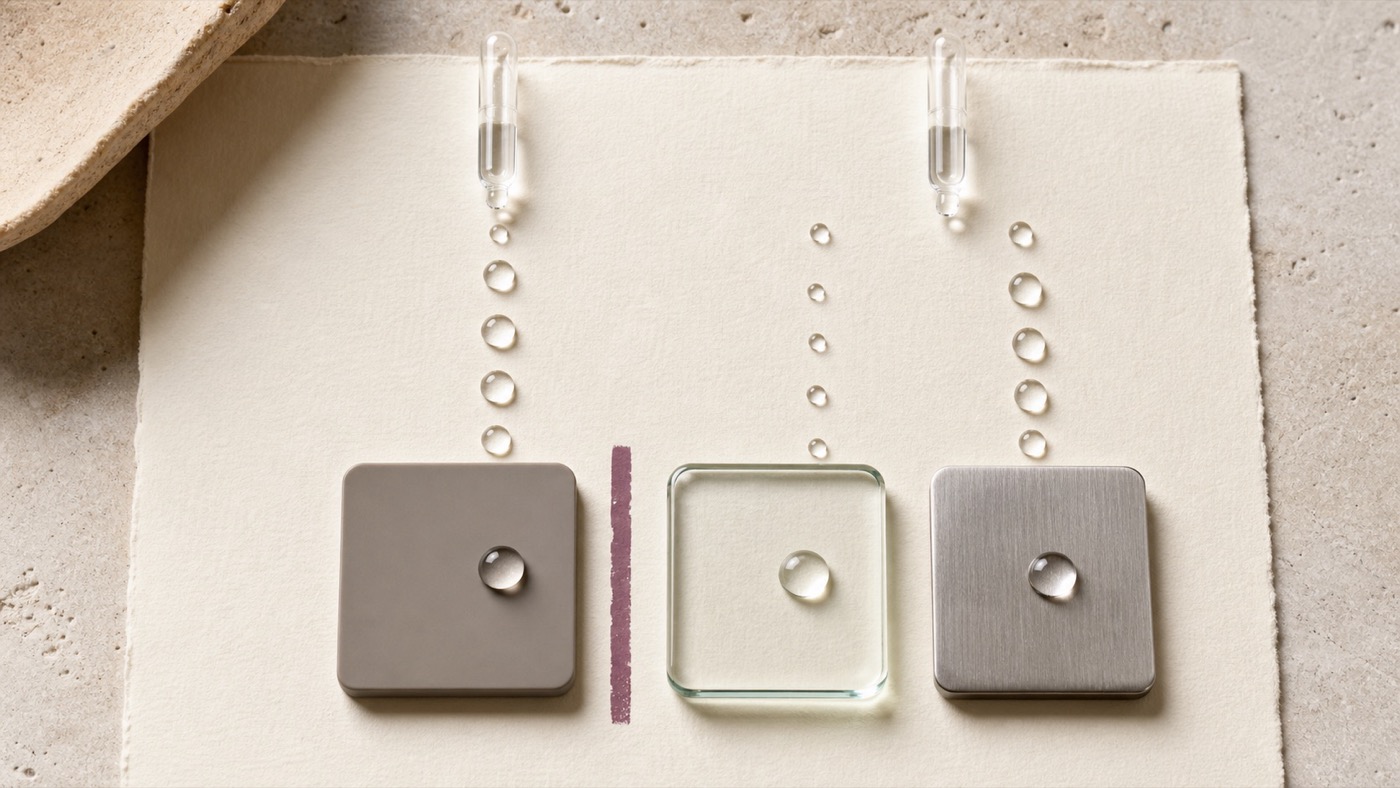
If the toy is silicone—or I am not completely sure what it is made from—I use water-based lubricant. If it is glass, stainless steel or hard ABS plastic, water-based and silicone lubricant are both material-compatible. If a latex barrier is involved, I avoid oil.
That one rule handles most real-life decisions. The complications are hybrid lubricants, mixed-material toys, porous sleeves and manufacturers that describe a surface as 'velvety' without naming it. In those cases I read both care guides rather than guessing from the photograph.
Lubricant compatibility is about protecting the surface as well as comfort. A reaction may show up as swelling, tackiness, pitting, colour change or a finish that never feels clean again.
Silicone toys: water-based is the calm answer
Silicone lubricant can interact with some silicone toy formulations because similar materials may migrate into or soften one another. Some premium manufacturers approve specific silicone lubricants, and plenty of pairings show no visible reaction, but the outcome is not consistent enough for me to make it the default.
If you want to test an approved pairing, place a tiny drop on an inconspicuous part of the base, leave it for twenty-four hours, then wash and inspect. Any tackiness, swelling or change in texture is a no. Do not run the experiment on the main contact surface five minutes before use.
Water-based lubricant avoids the issue and rinses easily from seams and buttons. Reapply it when drag returns, or add a few drops of water to reactivate a formula that has begun to dry.
Glass, steel and hard plastic give you more freedom
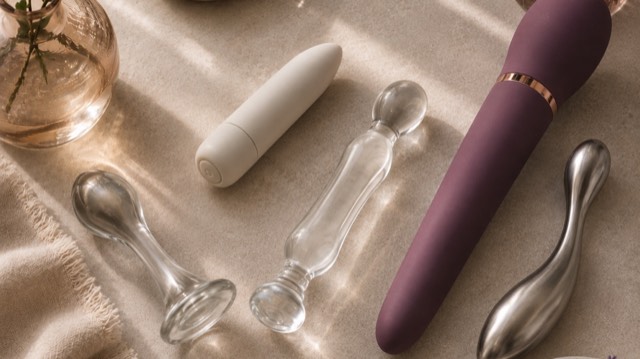
Borosilicate glass, stainless steel and ABS plastic do not have the same silicone-on-silicone compatibility concern. Choose water-based for simple cleanup or silicone for long-lasting glide, massage and water play.
Check for coatings, soft-touch finishes and silicone joins. A toy described as 'ABS' may still have a silicone button pad or flexible outer layer. The material list should account for every part that the lubricant will touch.
Oil can be compatible with these hard materials, but it damages latex barriers, stains fabric and takes more work to remove from skin. Compatibility with the toy is only one part of the decision.
Porous strokers and realistic-feel products need gentler care
TPE, TPR and other soft realistic-feel materials vary widely. Water-based lubricant is the safest default because silicone and oil formulas can be difficult to remove and may accelerate surface changes in some blends.
Use enough lubricant to prevent friction, then rinse every internal texture carefully and dry it completely. A product that stays oily, develops a smell or changes texture after cleaning is telling you its material is breaking down.
A compatible condom can protect a porous toy and simplify cleanup. Use a new barrier between people and body areas, and avoid oil when the barrier is latex.
Sensitive skin changes the formula, not the compatibility chart
Fragrance-free and unflavoured is where I begin. Warming, cooling and tingling formulas create sensation through ingredients that some bodies experience as irritation. 'Natural' is not a substitute for a complete ingredient list.
Patch-testing on the inner arm can reveal an obvious skin reaction, but genital tissue is more sensitive and the test cannot guarantee comfort. Use a small amount the first time and wash it off if you feel burning, persistent itching or swelling.
If irritation keeps returning across different products, talk with a clinician rather than endlessly removing ingredients at random. A lubricant may be responsible, but infections, skin conditions and hormonal changes can create similar discomfort.
What I check before the bottle goes in the drawer
I read the toy's material and care instructions, the lubricant ingredient list and its condom-compatibility statement. I check the expiry or period-after-opening mark, make sure the pump can be cleaned and avoid decanting into a prettier unlabelled bottle that loses all that useful information.
For a mixed collection, I keep water-based lubricant as the universal bottle and silicone lubricant separately for glass, steel, ABS, massage and shower use. That simple division prevents tired late-night chemistry decisions.
When in doubt, use water-based and ask the manufacturer. The right lubricant should disappear into the experience; it should not leave you inspecting an expensive surface the next morning with a sinking feeling.
This article is educational and is not a substitute for individualised care from a qualified professional.
Sources
- Lubricant and sex-toy compatibility guidance — Sexual Health Oxfordshire (NHS)
- Condom and lubricant guidance — U.S. Centers for Disease Control and Prevention
Abigail's shortlist
What I'd genuinely point you toward
These aren't here to fill a product rail. Each one illustrates something I've talked about in this guide, and I've included the reason I'd consider it.
- lubricant
- compatibility