How to choose sex toy size and shape
Product photography is terrible at showing scale. I use four measurements, a few shape details and an honest look at experience level to understand what will actually arrive.

Abigail's quick take
“Width, firmness and usable length tell me far more about fit than a dramatic total-length number.”
- Best for
- Anyone comparing insertable toys or struggling to understand scale from product photography.
- Keep in mind
- A rigid curve and a flexible shaft can share dimensions while feeling completely different.
Separate total length from insertable length
Total length includes handles, bases, charging ends and anything else that should remain outside the body. Insertable length is the maximum portion designed to enter. A seven-inch product with a large base may offer less usable depth than a shorter-looking toy. For many people, maximum depth is not the goal anyway; control and comfortable pressure matter more.
For anal products, the base must remain outside and be wide enough to prevent the toy from moving inside. For strap-on products, some shaft length may also sit in front of the harness rather than being available for penetration.
Width usually changes the experience more than length
Manufacturers may list diameter, width or circumference. Diameter measures straight across; circumference measures around. If only circumference is given, dividing it by about 3.14 gives an approximate diameter. Check whether the measurement describes the widest point, the insertable shaft or a decorative base.
A tapered shape lets the body adjust gradually. A pronounced head or sudden ridge can feel larger than the maximum number suggests. Softer material can compress, while firm glass or steel will not. If you are new to insertion, recovering from pain or unsure about pelvic-floor tension, smaller and gradual is a sensible shopping approach, but personal symptoms should be discussed with a clinician.
Curves, tips and flexibility direct pressure
A G-spot or prostate curve is designed to place pressure toward a specific area. The firmness of that curve determines how precisely it can be directed. Rounded tips tend to enter more gradually, while fuller or angular heads can produce stronger pressure. Texture may add friction but also asks for more lubricant and more attention during cleaning.
Flexible does not always mean soft. A product can have a flexible neck with a dense surface, or a plush exterior over a firmer core. Look for both material and construction details rather than relying on one adjective.
Remember the hand, the base and the controls
The part outside the body affects use too. A long handle can improve reach; a bulky handle can be awkward between bodies. Tiny buttons may disappear under lubricant. A suction base adds hands-free possibilities but can make a product heavier or less comfortable in a harness. Product photos often crop these practical proportions away.
For products used with a harness, check the base diameter and the harness's compatible O-ring size. A shaft can have suitable dimensions and still sit poorly if its base is too flexible, too small or too bulky for the system holding it.
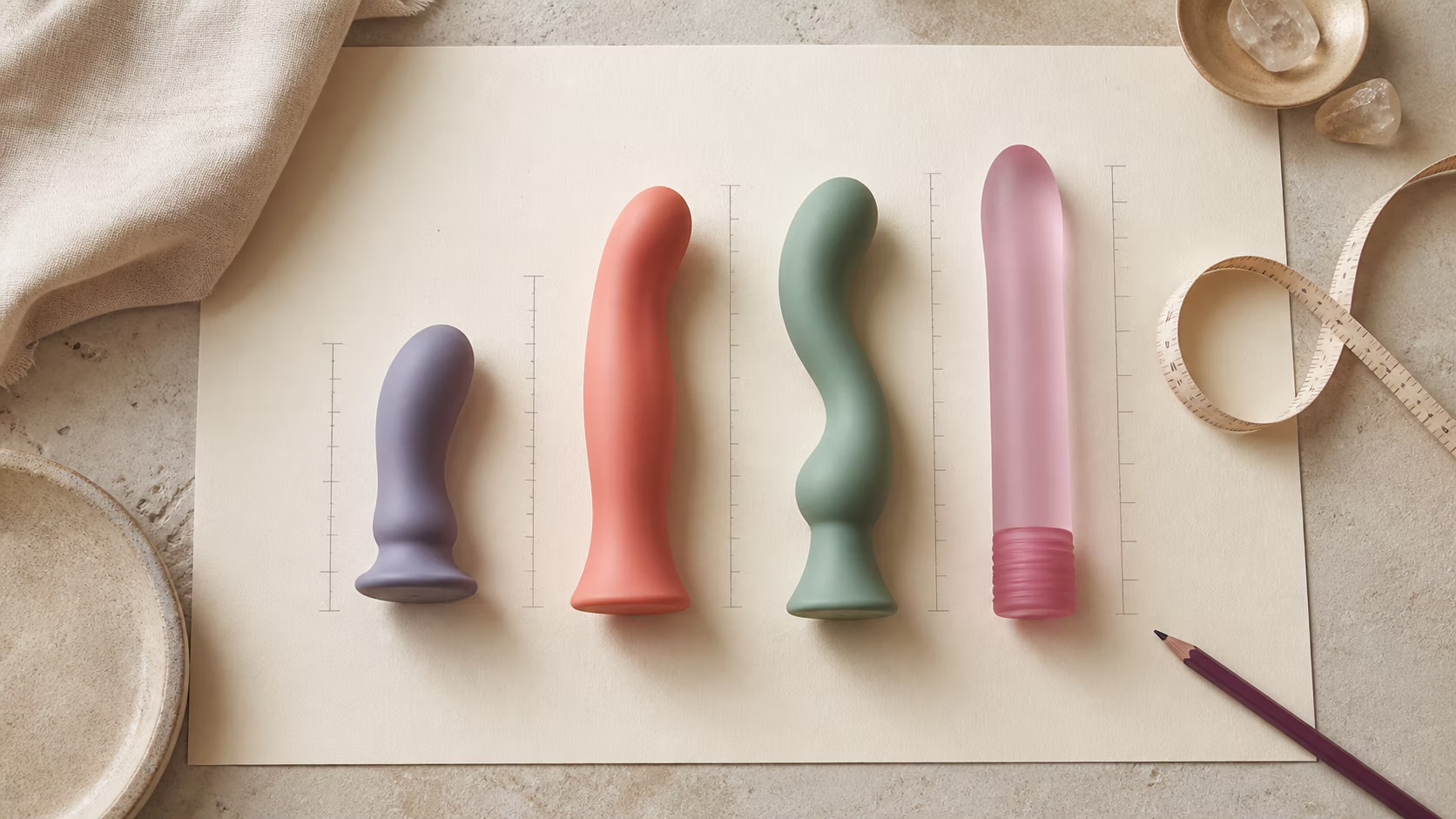
Before buying, sketch the listed measurements on paper or compare them with an ordinary object you already know. It is not glamorous, but it is much more reliable than assuming the model's hand or a white background is to scale. This guide offers general product education and cannot account for an individual health condition, injury or symptom. Stop if something hurts or causes persistent discomfort, and take personal medical questions to a qualified healthcare professional.
Sources
- ISO 3533:2021 sex-toy design and safety standard — International Organization for Standardization
- Anal-play health and safety guidance — Cleveland Clinic
Reviewed as general product-fit education. Pain, pelvic-floor symptoms and post-surgical questions require individualized clinical advice.
Abigail's shortlist
What I'd genuinely point you toward
These aren't here to fill a product rail. Each one illustrates something I've talked about in this guide, and I've included the reason I'd consider it.
- size
- shape
- dimensions
- buying guide
- beginner