How to choose a wand vibrator without buying more power than you need
A wand can be impressive and still be wrong for your hand, your space or the way you like to build intensity. I would compare contact, reach and controls before treating motor strength as the main event.
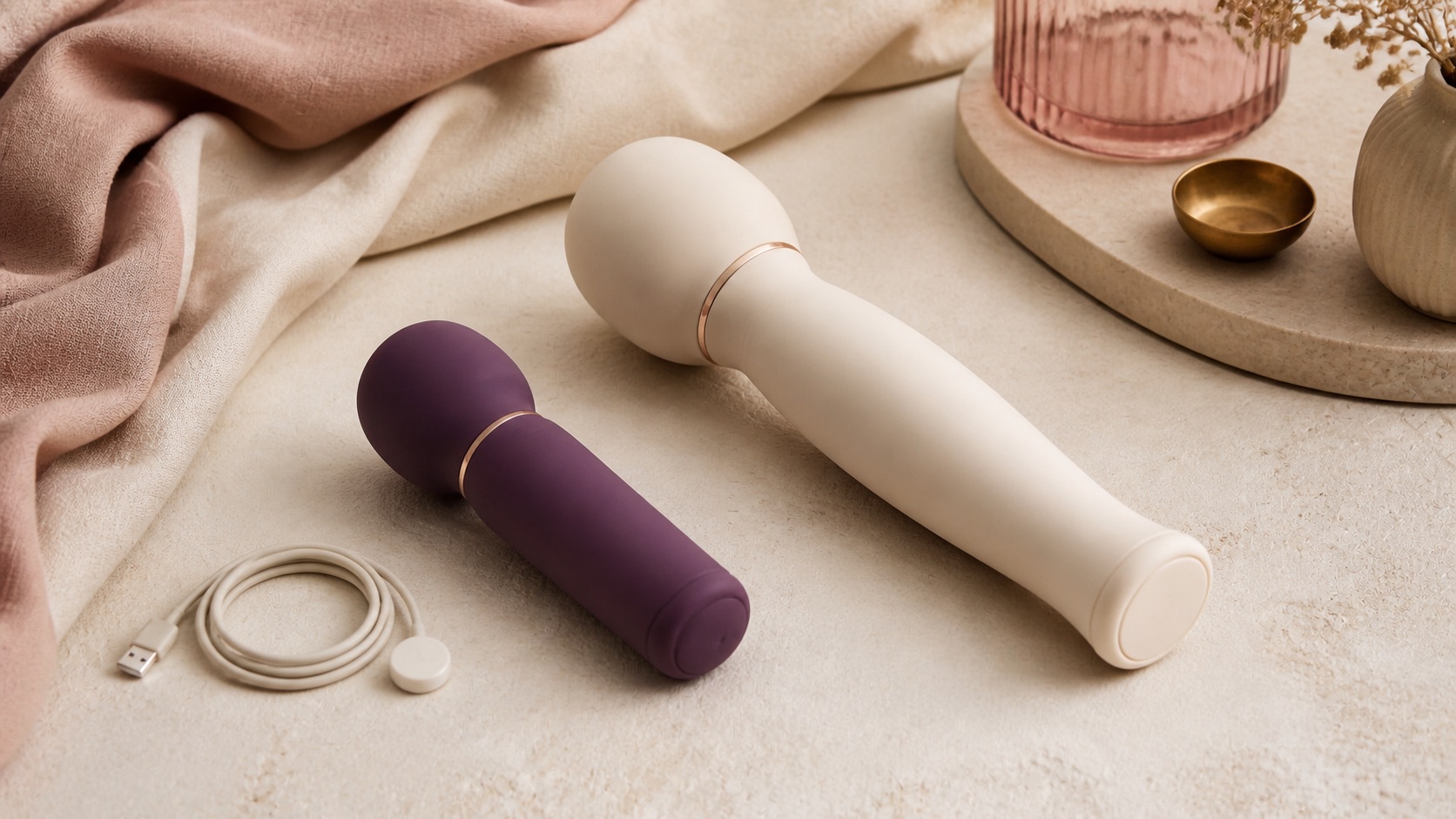

Abigail's quick take
“A wand should fit your hand, space and usable intensity range before its maximum power gets a vote.”
- Best for
- Shoppers deciding between compact, full-size, corded and rechargeable wand formats.
- Keep in mind
- A larger motor and longer handle add reach and presence, but also weight, noise and storage demands.
Power is not the first wand decision
A wand should not win simply because it has the strongest motor. If the handle tires your wrist, the head is difficult to place or the first setting already feels like too much, that power is mostly wasted. I start with the physical job the wand needs to do: reach comfortably, make contact where you want it and stay easy to adjust while it is running.
Wands are known for broad external vibration, but head diameter and flexibility change how broad that contact actually feels. A large rounded head spreads movement over more tissue and can make direct pinpoint stimulation less necessary. A smaller or firmer head is easier to place precisely, though it may feel more concentrated. Neither shape is automatically gentler; pressure, motor character and the usable low setting still matter.
I would also check whether the head is meant only for external use. Attachments can give some wands other roles, but compatibility should come from the manufacturer rather than from a similar-looking connection or an improvised fit.
Compact and full-size wands solve different problems
A compact wand takes less room, weighs less and is easier to bring into positions where a long handle would feel crowded. The compromise is reach. A short body may ask for more bending or more precise hand placement, and its smaller head will not reproduce the contact area of a full-size model simply because the silhouette looks familiar.
A full-size wand gives you leverage and distance between your hand and the contact point. That can be helpful when reach is limited or when you want broad massage as well as focused external use. It also creates a larger storage problem and may become tiring if much of the weight sits in the head. I look at total length, weight and handle diameter together because one number cannot describe how the object balances in a hand.
Product photographs often make every wand look roughly the same size. I would compare the listed dimensions with an object you already hold comfortably, then decide where the wand will live. A thirteen-inch device and a four-and-a-half-inch device are not interchangeable versions of the same purchase.
The lowest setting matters more than the longest pattern list
Most wands have enough intensity for plenty of people. The more useful question is whether the range begins low enough and moves in steps you can actually use. A motor that jumps abruptly from quiet to demanding gives you less control than one with several clearly separated steady levels, even when the box advertises fewer total modes.
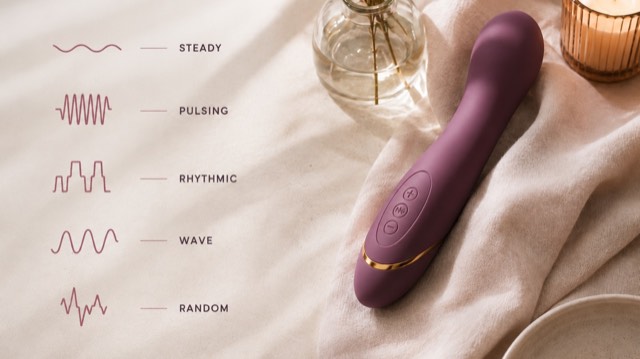
I prefer separate controls for power, intensity and patterns when the handle has room for them. A single button can be elegant on a tiny bullet; on a wand it can mean cycling through every pulse just to return to steady vibration. Buttons should be distinguishable by touch, reachable without changing your grip and easy to use with a little lubricant on your hands.
Motor character matters alongside strength. Lower-feeling, broader vibration is often described as rumbly, while sharper surface-level vibration is called buzzy. Those are subjective terms rather than measured grades, but reviews that describe the sensation under pressure tell you more than a claim that a wand is simply powerful.
Corded, rechargeable and water resistant are separate choices
A corded wand removes battery runtime and charging from the routine, but the cable has to work with your room. Check its length, where the outlet sits and whether an adapter is included. A rechargeable wand moves more freely, though it adds battery care, a charger to keep track of and the possibility that an aging battery will eventually shorten the useful session.
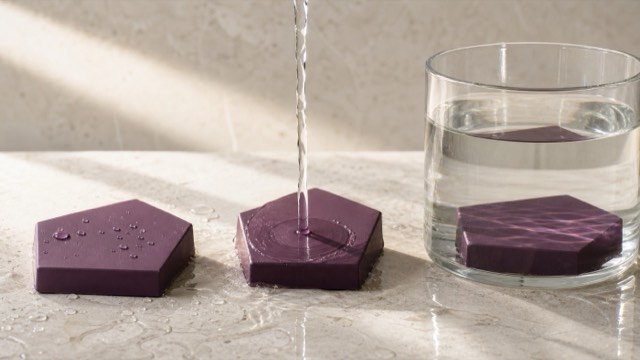
Do not infer water resistance from a silicone head or smooth housing. A wand may be waterproof, splashproof or not water resistant at all. That affects both where you can use it and how you can clean it. I want an exact manufacturer limit, especially around seams, detachable heads, cables and charging contacts.
Noise belongs in the same practical comparison. A full-size motor is unlikely to disappear into a silent room, and a corded design is not automatically louder or quieter than a rechargeable one. Look for reviews that distinguish a low hum from a higher whine and describe what happens when the head touches the body or bedding.
My shortlist starts with the hand, not the motor
For a compact shortlist, I would write down five things: the contact area you want, the reach you need, the lowest usable intensity, the control layout and the power source that fits your space. Then I would add water resistance, noise and storage. That order keeps an exciting motor specification from hiding an awkward object.
Choose a compact wand when portability and lighter handling outweigh long reach. Choose a full-size rechargeable wand when freedom from the outlet matters and you have room for its scale. Choose corded when consistent power and a simple plug-in routine matter more than moving around the room. There is no graduation ceremony from one format to another.
If a wand feels too intense, try less pressure, broader indirect contact or a layer of fabric before assuming you need to tolerate it. Persistent pain or numbness is a reason to stop, not a setting to push through. This guide offers general product education and cannot account for an individual health condition, injury or symptom. Stop if something hurts or causes persistent discomfort, and take personal medical questions to a qualified healthcare professional.
Sources
- Buzzy versus rumbly vibration — AboutSexToys
- What waterproof really means — AboutSexToys
- ISO 3533:2021 sex-toy design and safety standard — International Organization for Standardization
- IEC 60529 ingress-protection classification — International Electrotechnical Commission
Reviewed as consumer product-selection guidance against documented dimensions, controls, power and water-resistance details. Sensation and grip preferences vary.
Abigail's shortlist
What I'd genuinely point you toward
These aren't here to fill a product rail. Each one illustrates something I've talked about in this guide, and I've included the reason I'd consider it.
- wand vibrators
- vibration
- buying guide
- controls
- ergonomics