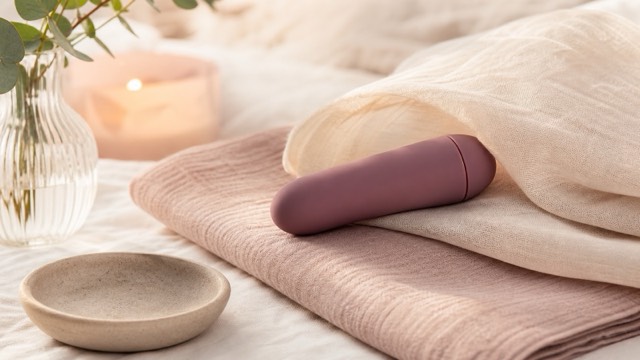
Sex toys during menopause: a comfort-first guide
Bodies can become drier, more sensitive or simply less predictable around menopause. That does not mean pleasure is over; it means comfort, control and a little patience deserve to lead the shopping list.
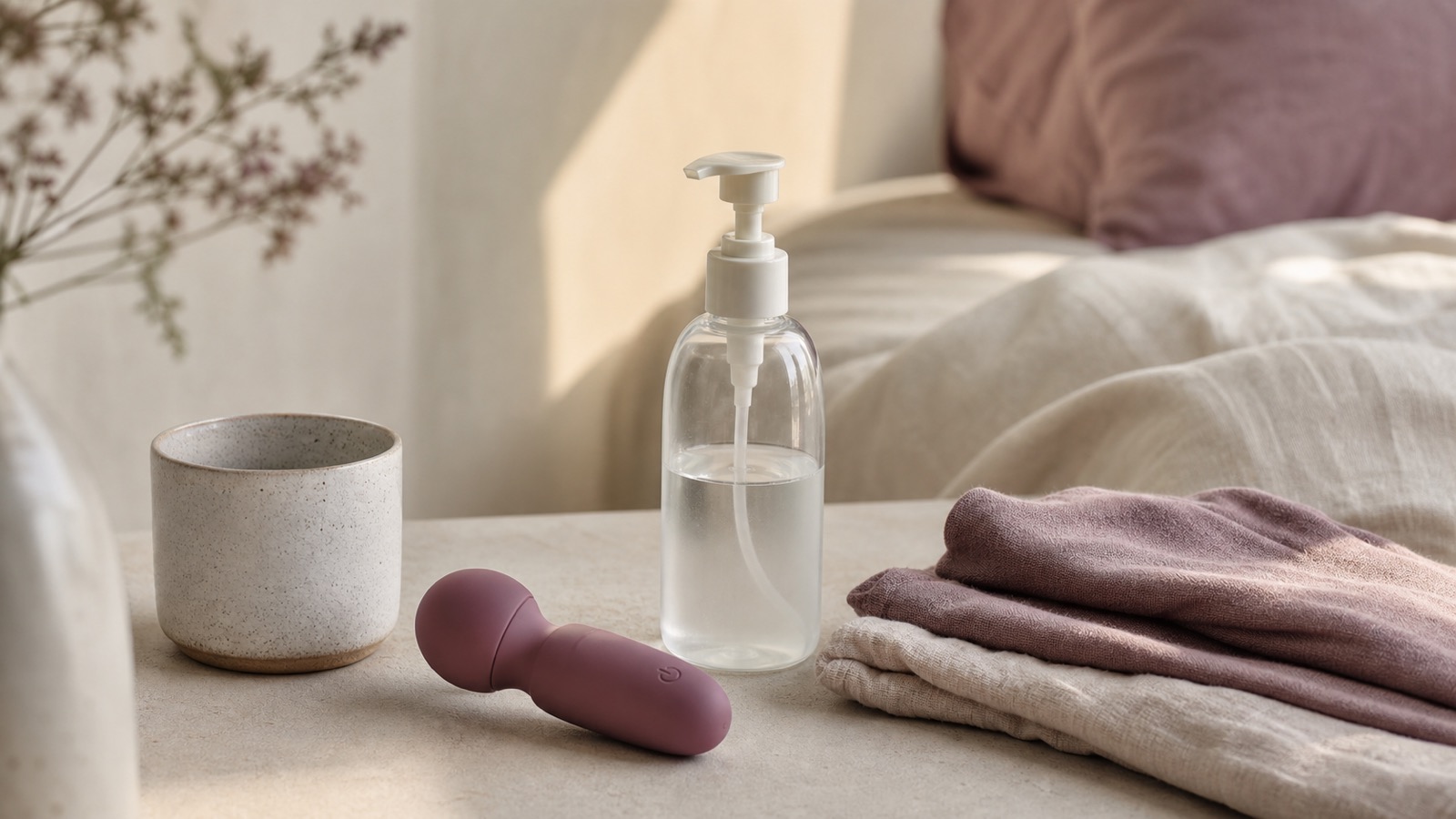

Abigail's quick take
“I would shop for comfort and control as your body feels now, rather than treating pleasure as something your body has lost.”
- Best for
- People navigating dryness, sensitivity or changing comfort around menopause.
- Keep in mind
- Persistent pain, bleeding or tissue changes deserve clinical care, not a more powerful product.
A changing body is not a failed body
Perimenopause and menopause can change natural lubrication, tissue comfort, arousal and the way pressure or vibration registers. Some people notice very little. Others find a familiar routine suddenly feels dry, sharp or slow to build. I would not treat any of those changes as evidence that your body has stopped working. They are information about what it may need now.
The useful shopping question is not, ‘Which toy fixes menopause?’ No product can make that promise. I start with what would make exploration easier today: more glide, less direct contact, a lower first setting, a shape that does not demand depth, or controls that can be changed without losing a comfortable position.
External products often leave the most room to adjust
External toys are not automatically gentler, but they are easier to move away, use through fabric or reposition around sensitive tissue. A compact vibrator gives precise control; a wand spreads sensation over a broader area and adds reach. If direct clitoral contact feels overwhelming, try the surrounding vulva, a layer of underwear or a little lubricant on the toy rather than pushing through discomfort.
Internal products can still be comfortable, particularly when you already enjoy pressure or fullness, but I would favor a gradual taper, modest width and plenty of usable handle. A rigid curve can feel more pronounced than its dimensions suggest. During a period of changing sensitivity, adaptability is worth more to me than a dramatic shape or a long list of modes.
The lowest setting matters more than the highest
Marketing usually celebrates power. I look for range. The first setting should be genuinely usable, the controls should change predictably and the power button should be easy to find by touch. A toy that begins abruptly or requires cycling through every pattern can turn a tentative moment into an unnecessarily technical one.
Broad, lower-frequency vibration often feels less sharp to me than a tiny high-frequency motor, but those words describe tendencies rather than guarantees. Air-pulse products reduce direct vibrating contact, yet their enclosed sensation can still feel intense. Start with the mechanism you are curious about, then judge the actual low setting and how easily you can move away from it.
Lubricant and vaginal moisturizer do different jobs
Lubricant reduces friction during sexual activity. A vaginal moisturizer is used on a schedule to address ongoing dryness, and it is not necessarily designed as toy lubricant. I keep those categories separate because a product that is comfortable for daily moisture may not have the glide, barrier compatibility or toy-material guidance needed during play.
For toys, water-based lubricant is my broad default because it works with most materials and barriers. Silicone lubricant lasts longer but may not suit every silicone toy, so check both labels or spot-test according to the maker’s instructions. Fragrance, warming and tingling ingredients are optional sensations, not signs of a better formula; when tissue feels reactive, simple and unscented is the sensible first bottle.
Comfort should improve as you adjust—not require endurance
Give arousal time, use more lubricant than habit tells you, and let external pleasure be the whole experience if that is what feels good. If insertion is part of the plan, begin smaller than the product photography makes seem ambitious and stop when pressure becomes pain. A slower start is not a compromise; it is how you learn what has changed without turning your body into a test.
Dryness, burning, bleeding, urinary symptoms or persistent pain are good reasons to speak with a clinician. Menopause-related symptoms have treatment options beyond what a retailer can responsibly explain. I want a toy to support comfort and curiosity, never to delay care or disguise a symptom that keeps returning. This guide is general education, not individualized medical advice. Persistent pain, bleeding, numbness or a sudden change that worries you deserves care from a qualified healthcare professional.
Sources
- Vaginal dryness and menopause guidance — American College of Obstetricians and Gynecologists
- Defining sexual health — World Health Organization
- Lubricant and sex-toy compatibility guidance — Sexual Health Oxfordshire (NHS)
Reviewed as general sexual-wellness and product-selection education using current clinical guidance on menopause-related dryness. It does not diagnose or treat symptoms.
Abigail's shortlist
What I'd genuinely point you toward
These aren't here to fill a product rail. Each one illustrates something I've talked about in this guide, and I've included the reason I'd consider it.
- menopause
- comfort
- sensitive skin
- lubricants
- buying guide