Do Kegel balls actually work? What pelvic-floor trainers can—and can't—do
A weighted ball can give pelvic-floor exercise something tangible to work against, but it cannot tell you whether your muscles need strengthening in the first place. I would separate the exercise from the product before choosing a weight, app or vibration feature.

Abigail's quick take
“Kegel balls can add resistance or feedback to an appropriate exercise plan, but they cannot diagnose whether a pelvic floor needs strengthening.”
- Best for
- Anyone comparing manual weights, connected trainers and vibrating Kegel-style products.
- Keep in mind
- Pain, difficulty relaxing or other pelvic symptoms may call for assessment and relaxation work—not more contractions.
The exercise matters more than the object
The pelvic floor is a group of muscles and connective tissues that supports pelvic organs and contributes to bladder, bowel and sexual function. Kegel exercises are deliberate contractions and full releases of those muscles. A ball, cone or sensor can provide resistance or feedback, but the device does not perform a useful contraction for you simply by being inserted.
Clinical guidance supports pelvic-floor muscle training for some concerns, particularly forms of urinary leakage. Research into sexual function is promising but not definitive. A 2024 systematic review found improvements across several measures, while rating the certainty of the evidence very low because the studies and exercise programs varied considerably. That is a reason for measured expectations, not a claim that training never helps.
I would be cautious with promises of stronger orgasms, tighter anatomy or a transformed sex life. Pelvic-floor function includes coordination and relaxation as well as strength. A product can make a routine easier to feel or remember; it cannot guarantee an outcome, diagnose the cause of symptoms or replace an assessment when something hurts.
Balls, weighted cones and feedback trainers do different jobs
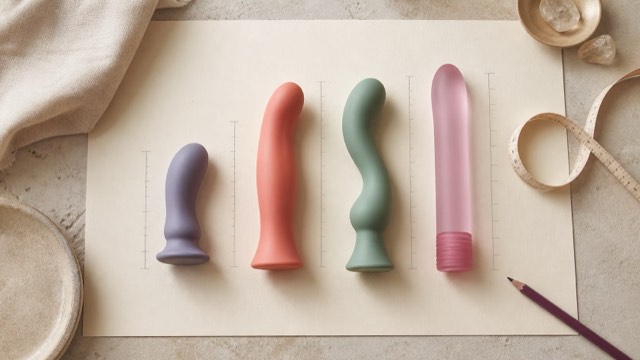
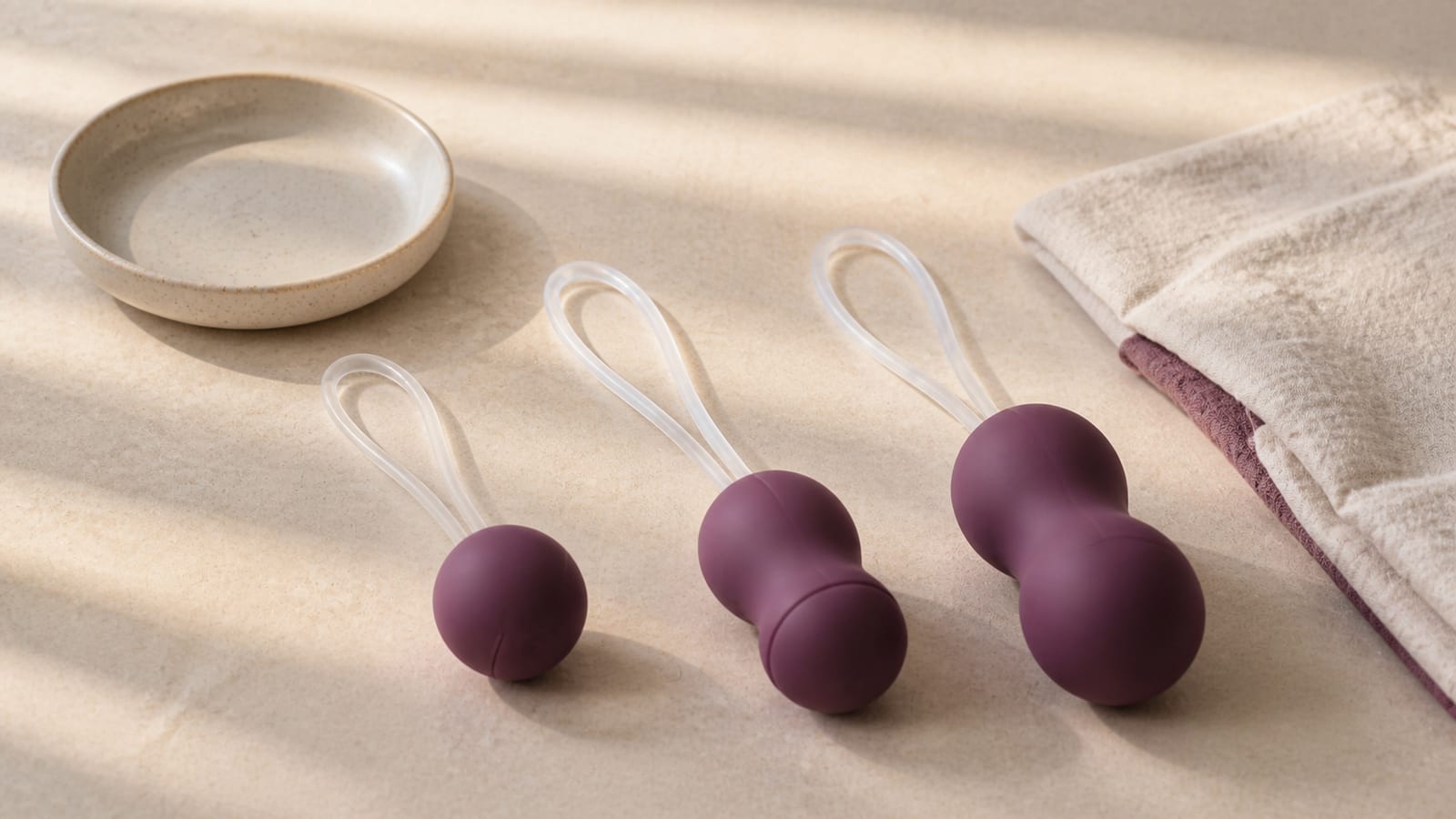
A simple Kegel ball or vaginal cone provides weight that the pelvic-floor muscles respond to while you follow a planned contraction-and-release routine. Sets may offer different sizes or weights. Heavier is not automatically more advanced: a weight that causes gripping, breath-holding or other muscles to take over can make the exercise less controlled rather than more useful.
A connected trainer may measure pressure or movement and display feedback in an app. That can help someone see whether they are contracting and relaxing on cue, but the app is only as useful as its sensor, instructions and interpretation. Check what it measures, whether the product works without an account and what personal data the company stores.
Vibrating Kegel-style toys belong in a separate comparison. Vibration can be pleasurable and may make an internal product easier to notice, but a pattern list is not evidence of effective muscle training. If pleasure is the primary goal, shop it as an internal vibrator. If rehabilitation or a specific symptom is the goal, begin with qualified guidance rather than a motor specification.
Not every pelvic floor needs more strengthening
Pelvic-floor muscles can be weak, poorly coordinated, overactive or a mixture of those things. A tight pelvic floor may have difficulty lengthening and releasing. Mayo Clinic guidance cautions that people with overactive or tense muscles may need relaxation, stretching and lengthening before strengthening. More contractions can be the wrong direction when the underlying problem is excess tension.
Pain with insertion or sex, persistent pelvic pain, difficulty beginning urination, chronic constipation or a feeling that the muscles will not release deserves professional assessment. Stop using an exerciser if it causes pain, numbness, bleeding, worsening urinary symptoms or discomfort that persists after removal. Do not try to train through those signals.
It is also easy to contract the abdomen, buttocks or thighs instead of the pelvic floor, or to hold the breath and bear down. A pelvic-floor physical therapist can assess contraction and relaxation, correct technique and build an individualized plan. That is more useful than guessing from whether a ball stays in place.
Choose a trainer by control, retrieval and care
For a manual product, I want exact dimensions and weight, an intact nonporous surface, and a substantial retrieval loop or stem that remains outside the body. A gradual shape is easier to insert than an abrupt edge. Multiple pieces should be clearly distinguishable so you do not have to rely on memory to identify the weight.
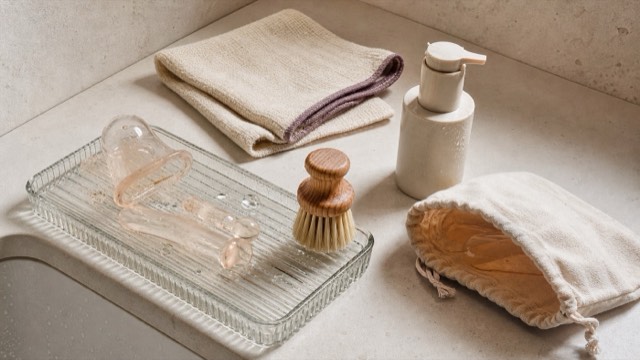
Use a compatible lubricant when needed and follow the brand's insertion, duration and cleaning instructions. Do not build a routine around stopping urine midstream; Mayo Clinic advises against making that a habit because it can interfere with complete bladder emptying. Empty the bladder first and exercise in a comfortable position where removal is easy.
Start with the lightest or simplest option recommended for your plan, not the product that sounds most challenging. A useful contraction includes a complete release. If the device begins to slip, that is information—not a failure that requires clenching harder for as long as possible. Remove it, rest and reconsider the weight or technique.
Decide whether you need guidance, resistance or pleasure
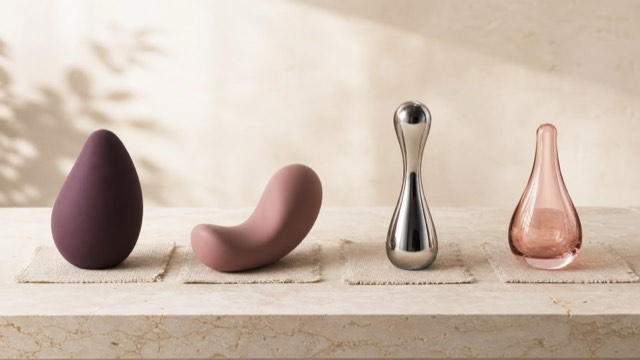
A manual set makes sense when you already understand the exercise and want uncomplicated resistance. An app-connected trainer may help when visible prompts and feedback make consistency easier. A vibrating ball suits someone primarily interested in internal sensation. Those are three different reasons to buy, even when retailers place the products in one category.
Before checkout, I would write down the goal, current symptoms, dimensions, weight, retrieval design, materials, cleaning method and whether an app is optional. If the goal is treating leakage, pain, prolapse symptoms or postpartum changes, ask a clinician or pelvic-floor physical therapist whether strengthening is appropriate and how progress should be measured.
Kegel balls can be tools inside a well-chosen exercise plan. They are not a universal pelvic-floor prescription, and keeping one in for longer is not proof of better training. The useful product is the one that supports correct contraction and full relaxation without pain or guesswork. This guide offers general product education and cannot account for an individual health condition, injury or symptom. Stop if something hurts or causes persistent discomfort, and take personal medical questions to a qualified healthcare professional.
Sources
- Kegel exercises: technique, vaginal weights and when to seek help — Mayo Clinic
- Pelvic-floor muscle training and female sexual function: systematic review — American Journal of Obstetrics and Gynecology via PubMed
- Pelvic-floor strengthening, tension and professional assessment — Mayo Clinic Press
Reviewed as general pelvic-floor and product education against current clinical guidance and systematic-review evidence. It does not diagnose weakness, tension, pain or incontinence.
Abigail's shortlist
What I'd genuinely point you toward
These aren't here to fill a product rail. Each one illustrates something I've talked about in this guide, and I've included the reason I'd consider it.
- Kegel balls
- pelvic floor
- pelvic-floor trainers
- sexual wellness
- evidence